100 Days of Deception (2026) Episode 2 Recap & Ending Explained
Read 100 Days of Deception (2026) Episode 2 recap and ending explained. So-ran's tragic past emerges as Ga-kyung uncovers mysterious clues from 1919. Copy
บทความนี้ยังไม่มีในภาษาของคุณ จึงแสดงเวอร์ชันภาษาอังกฤษ
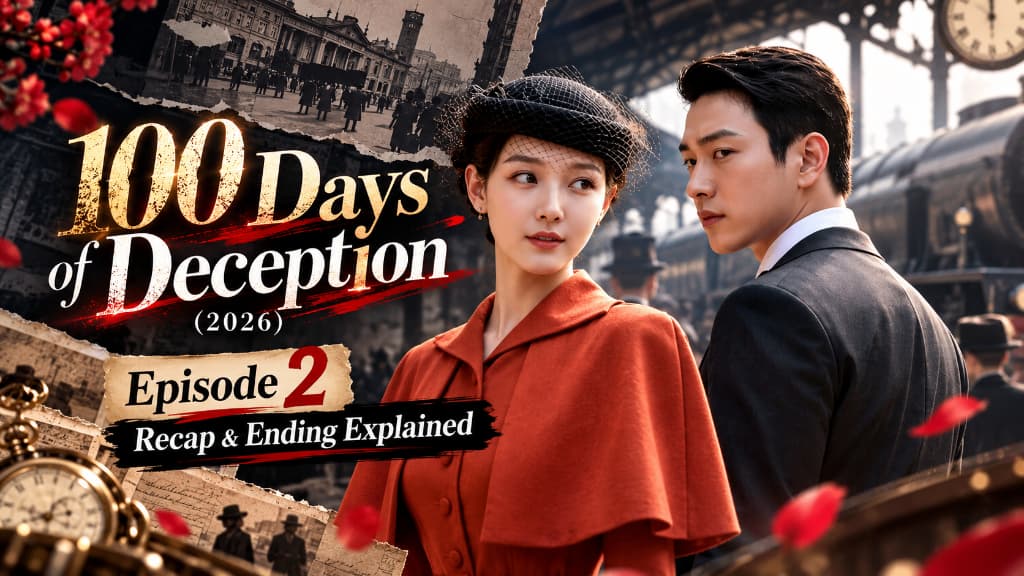
100 Days of Deception (2026) Episode 2 Recap & Ending Explained: A Tragic Past and a Dangerous Secret
Drama: 100 Days of Deception (2026)
Episode: 2
Genre: Historical Drama, Espionage, Thriller
Setting: Gyeongseong, Korea, 1932
Spoiler Warning: This article contains major spoilers for Episode 2.
Introduction
100 Days of Deception (2026) Episode 2 deepens the mystery surrounding Lee Ga-kyung, So-ran, and the Korean independence movement as the consequences of the failed assassination attempt begin to unfold.
After an armed attacker disrupts an important gathering, suspicion falls on everyone connected to the incident. Ga-kyung finds herself caught between dangerous colonial officials and resistance members who cannot afford to have their secrets exposed.
Meanwhile, So-ran’s painful past reveals why she is determined to assassinate Inspector General Sato.
The episode explores betrayal, grief, survival, and the devastating personal cost of fighting for independence.
Most importantly, a mysterious connection to the events of 1919 introduces new questions about identities, lost family members, and secrets that have remained hidden for thirteen years.
The Assassination Attempt Creates Chaos
Episode 2 begins immediately after the violent confrontation at the Inspector General’s gathering.
An unidentified attacker has attempted to assassinate Sato, sending the household into chaos.
Security personnel search the residence while the guests struggle to understand what happened.
Interpreter Suzuki is among those caught in the confusion.
The authorities demand explanations, and anyone who appears suspicious risks being accused of involvement in the attack.
Ga-kyung is particularly vulnerable.
She entered the residence under questionable circumstances and has already attracted unwanted attention because of her pickpocketing activities.
When she is questioned, she desperately tries to prove that she had nothing to do with the assassination.
Her survival depends on convincing the people around her that she is merely an innocent servant.
Yoo Philip Helps Protect Ga-kyung
As the investigation continues, American journalist Yoo Philip becomes an important figure.
Philip explains that Ga-kyung’s actions helped him respond quickly during the attack.
According to his account, she contributed to saving both him and the Inspector General.
His testimony changes the way the authorities treat her.
Rather than being regarded solely as a suspicious intruder, Ga-kyung gains some protection from Philip’s intervention.
The journalist also fires at the attacker during the confrontation, making him an important witness.
However, his involvement attracts the attention of the colonial administration.
Officials recognize that an assassination attempt against a senior Japanese official could create an international scandal.
They are particularly concerned about how foreign newspapers might portray the incident.
For the time being, they want to prevent information about the attack from spreading.
Ga-kyung Demands Payment for Her Silence
Once the immediate danger passes, Ga-kyung confronts So-ran.
She reminds her that she nearly lost her life because of the missing ammunition.
Instead of accepting the original arrangement, Ga-kyung demands 100 won as compensation.
Her attitude frustrates So-ran, who understands how close the failed operation came to exposing the resistance network.
Ga-kyung insists that she never intended to become involved in political violence.
She only wanted money.
The argument soon becomes a confrontation between two different views of life.
So-ran questions whether Ga-kyung cares about her country.
Ga-kyung responds that she cannot be expected to sacrifice herself simply because she was born in Joseon.
She points out that the country remains under colonial rule despite the sacrifices of independence activists.
Her words are harsh, but they reflect the hopelessness of someone who has spent her life struggling to survive.
So-ran sees independence as a duty.
Ga-kyung sees survival as her first responsibility.
Their disagreement reveals the ideological conflict at the heart of the drama.
Hideo Becomes Suspicious of Ga-kyung
Although Ga-kyung manages to escape the immediate investigation, Hideo remains unconvinced by her story.
He remembers seeing her traveling in first class and questions why someone claiming to be a live-in maid would have been there.
He also notices inconsistencies in her explanations.
Their confrontation becomes increasingly tense when Hideo accuses her of stealing his wallet.
Ga-kyung refuses to admit wrongdoing.
Instead, she challenges him to take her to the police if he truly believes she is guilty.
She also reminds him that her actions helped save his life.
The exchange demonstrates Ga-kyung’s ability to defend herself through quick thinking and bold conversation.
Yet Hideo is not an ordinary opponent.
He has influence within the colonial administration and seems determined to discover who she really is.
His growing interest in Ga-kyung creates another potential threat to the resistance operation.
So-ran Suffers a Devastating Loss
Following the attack, So-ran is taken to the hospital.
To support her cover, she has deliberately inflicted a minor injury on herself.
However, the situation becomes far more serious than expected.
The doctors reveal that she has lost her unborn child.
The news is devastating.
Although So-ran has been preparing to risk her life for the independence movement, the loss introduces another deeply personal tragedy.
Her husband, Yoo Philip, remains concerned about her condition.
The hospital scenes reveal the emotional strain hidden beneath So-ran’s calm and determined exterior.
Her mission requires her to maintain an elaborate deception, but the suffering she experiences is painfully real.
The Colonial Authorities Plan Their Response
The failed assassination attempt creates problems for Inspector General Sato and his administration.
The Japanese authorities are preparing to promote Manchukuo internationally as a legitimate independent state.
They want foreign journalists to portray Japanese rule as stable and peaceful.
News of an assassination attempt would undermine that image.
As a result, officials become determined to control the narrative.
They investigate possible connections between the attacker and Korean resistance organizations.
One suspect is linked to earlier revolutionary activities.
The name Keum Seok-jung emerges during the investigation.
Officials also discuss Han Cheol-yong, a man associated with an attempted assassination of the Jongno police chief twelve years earlier.
Rather than waiting for conclusive evidence, the authorities consider blaming Gugukdan.
They believe that accusing the resistance organization will provide a convenient justification for destroying it.
The investigation therefore becomes more than a search for the attacker.
It is also an opportunity for the colonial administration to eliminate political opposition.
Interpreter Suzuki’s Position Becomes Uncertain
Following the incident, Interpreter Suzuki is placed on sick leave.
His absence creates an opening within the colonial administration.
Officials begin discussing who should take over the interpreter’s responsibilities.
Because foreign journalists are becoming increasingly important to Japan’s political messaging, the position requires someone capable of handling English-language communication.
Hideo becomes involved in these arrangements.
He is instructed to pay particular attention to Yoo Philip.
Although Philip helped during the assassination attempt, the authorities do not fully trust him.
His position as an American journalist makes him both useful and potentially dangerous.
Meanwhile, Suzuki’s absence raises concerns for the resistance network, which depends on carefully maintained relationships inside the colonial government.
Hideo Confronts His Father
One of the episode’s most emotionally revealing scenes occurs when Hideo confronts Inspector General Sato.
Hideo asks his father why he pointed a gun at him during the chaos.
The incident has deeply shaken him.
He recalls that his father has treated him with suspicion before.
For years, Hideo has tried to become a son worthy of his father’s approval.
He has worked hard to prove his loyalty and usefulness.
Yet his father’s actions suggest that their relationship is built on fear and distrust rather than affection.
Hideo finally demands an explanation.
He wants to understand what he must do to earn his father’s confidence.
The confrontation reveals a vulnerable side of a character who otherwise appears powerful and intimidating.
It also introduces uncertainty about the history between father and son.
So-ran and Her Ally Discuss the Failed Mission
After returning from the hospital, So-ran struggles with the consequences of the failed assassination.
Her allies remain committed to killing Sato.
They discuss the risks posed by Ga-kyung, who knows more about their operation than she should.
Some believe allowing her to leave freely could endanger everyone involved.
However, So-ran resists the idea of harming an innocent person simply to protect the mission.
She insists that the independence movement must not abandon its principles.
Her ally reminds her of an earlier promise made in Shanghai.
He will handle the weapons and violence, while So-ran is expected to communicate the truth to the world after the operation succeeds.
But So-ran’s determination has become increasingly personal.
She believes she must be the one to confront Sato.
The reason for her obsession is finally revealed through a devastating flashback.
The Tragedy of March 1919
The episode returns to March 1, 1919, during Korea’s independence movement.
At that time, So-ran lived with her husband, Keum Seok-jung, and their young daughter, Seo-hee.
Their family had already experienced years of hardship before finally welcoming their daughter after ten years of marriage.
But their happiness was destroyed during a brutal confrontation with colonial authorities.
Sato’s men arrested members of the family and demanded information about independence activities.
Keum Seok-jung pleaded for his wife and daughter to be released.
He attempted to take responsibility for the resistance operation himself.
His desperate confession failed to protect his family.
The authorities threatened innocent people and carried out acts of violence to force cooperation.
So-ran witnessed the destruction of everything she loved.
Her daughter was taken from her, and the events left her with a grief that would shape the rest of her life.
The tragedy transformed her understanding of resistance.
What had once been a political struggle became an intensely personal mission.
Why So-ran Wants Revenge Against Sato
The flashback explains why So-ran has waited thirteen years to assassinate Sato.
She holds him responsible for the tragedy that destroyed her family.
For years, she did not even know whether he was alive.
When she finally learned that he would return to Gyeongseong, she recognized an opportunity to confront him.
Her desire for revenge is inseparable from her commitment to Korean independence.
However, the episode also suggests that her grief has made it difficult for her to distinguish justice from personal vengeance.
She has dedicated so much of her life to this mission that failure seems unbearable.
Her emotional burden becomes clearer when she remembers her daughter.
Even after thirteen years, the name Seo-hee continues to carry enormous meaning.
The Name Keum Seo-hee Creates a New Mystery
Earlier in the episode, Ga-kyung uses the name Keum Seo-hee while pretending to be a servant.
The name immediately becomes significant when So-ran’s past is revealed.
Seo-hee was the name of So-ran’s daughter.
The episode establishes a mysterious connection between Ga-kyung’s false identity and So-ran’s lost child.
The significance of this coincidence is not yet fully explained.
It raises the possibility that the two women’s histories may be connected in ways neither currently understands.
For So-ran, the name brings back memories she has spent thirteen years trying to survive.
For Ga-kyung, the identity is part of another attempt to escape danger.
The contrast creates one of the episode’s most intriguing mysteries.
Ga-kyung Loses Something Precious
After leaving So-ran’s residence, Ga-kyung returns to her familiar surroundings.
She discovers that an important piece of paper has disappeared.
The document is connected to her plans for reaching America.
She searches desperately, questioning the people around her.
Unfortunately, someone has already used the paper without realizing its importance.
The loss leaves Ga-kyung devastated.
She explains that the document represented everything she had been working toward.
Without it, her carefully prepared escape plan may be ruined.
Her reaction shows how much hope she has invested in leaving Joseon.
For Ga-kyung, America is not merely another country.
It represents the possibility of freedom from poverty, danger, and the limitations of her current life.
Despite the setback, she refuses to abandon her dream.
She insists that she will survive and reach America somehow.
A Mysterious Pawn Ticket From 1919
Ga-kyung’s search for answers leads her toward a pawnshop.
She becomes interested in the possibility that someone might have pawned an item thirteen years earlier and never returned to reclaim it.
The date is significant because it connects directly to the tragedy of 1919.
She asks whether the shop might still hold belongings left behind for such a long period.
The pawnshop owner questions why anyone would abandon a valuable possession for thirteen years.
Ga-kyung suggests that the item might have been something the owner wanted to hide.
Her questions imply that the pawn ticket and the past may be connected.
The episode does not reveal the full truth behind the item.
However, its connection to 1919 suggests that it could become important to the mystery surrounding So-ran’s family.
Episode 2 Ending Explained
The final scenes leave several important storylines unresolved.
Ga-kyung continues searching for a way to escape Joseon.
So-ran remains determined to complete her mission against Sato.
The colonial authorities prepare to use the assassination attempt as an excuse to intensify their campaign against Gugukdan.
Meanwhile, Hideo’s relationship with his father grows increasingly complicated.
The episode’s most important development is the revelation of So-ran’s tragic past and the mysterious connection involving the name Seo-hee.
The pawn ticket also introduces a potential clue linking the present-day story to the events of 1919.
What Does the Ending Mean?
The ending suggests that the characters’ separate stories may be more closely connected than they realize.
Ga-kyung believes she is simply trying to survive.
So-ran believes she is pursuing revenge for her lost family.
Yet both women are now connected to secrets surrounding the same historical tragedy.
The final preview hints at further developments involving espionage, a dangerous infiltration mission, and Ga-kyung’s unusual abilities.
Her talent for deception and quick thinking may become valuable to people operating inside the colonial government.
The major questions going into Episode 3 are:
- What is the true significance of the pawn ticket from 1919?
- Why did Ga-kyung use the name Keum Seo-hee?
- Can So-ran complete her mission against Sato?
- Will Hideo uncover Ga-kyung’s real identity?
- How will the colonial authorities use the failed assassination attempt against Gugukdan?
- Could Ga-kyung become involved in a new undercover operation?
Episode 2 Review: The Emotional Cost of Deception
Episode 2 expands the story beyond the immediate excitement of espionage.
The flashback to 1919 provides the emotional foundation for So-ran’s actions.
Her determination is no longer simply an expression of political loyalty.
It is also the result of years of unresolved grief.
Ga-kyung remains an equally compelling character because her priorities are so different.
She does not want to become a hero.
She wants to survive and build a better future.
Yet her resourcefulness repeatedly places her at the center of dangerous situations.
The episode also gives Hideo greater emotional depth through his troubled relationship with Sato.
Together, these storylines explore how people respond differently to fear, loss, and the desire for freedom.
Three Major Themes
1. The Long Shadow of Trauma
The events of 1919 continue to influence the characters thirteen years later.
2. Survival Versus Revenge
Ga-kyung seeks freedom through escape, while So-ran seeks it through confrontation.
3. The Danger of Hidden Identities
False names, secret loyalties, and political deception make it increasingly difficult to distinguish allies from enemies.
Final Thoughts
100 Days of Deception (2026) Episode 2 delivers a more emotionally intense chapter that reveals the painful history behind So-ran’s assassination mission.
The failed attack creates new dangers for the resistance movement, while the colonial administration prepares to exploit the situation for its own purposes.
Ga-kyung continues struggling to protect her dream of reaching America, but her involvement with So-ran makes that goal increasingly difficult.
The revelation surrounding Keum Seo-hee and the mysterious pawn ticket adds another layer of intrigue.
By the end of the episode, the story has evolved from a chance encounter between a pickpocket and a resistance fighter into a larger mystery involving family, identity, revenge, and national independence.
Episode 2 leaves viewers with one central question: How deeply is Ga-kyung connected to the tragedy that changed So-ran’s life thirteen years ago?
What did you think of 100 Days of Deception Episode 2? Do you believe Ga-kyung and So-ran share a hidden connection? Share your theories in the comments.
Read more Korean drama recaps, reviews, and ending explanations on WikiDrama.com.